Skindog Ova Thunderbolt Black 7'0"

Skindog Ova Thunderbolt Black 7'0"

$1,260.00
Sale price  $1,260.00 Regular price  $1,260.00
Skip to product information
Skindog Ova Thunderbolt Black 7'0"

Skindog Ova Thunderbolt Black 7'0"

Skindog
SUB262508286
$1,260.00
Sale price  $1,260.00 Regular price  $1,260.00
7'0" x 22" x 2.875" Vol: 47L
Fin System: FCS II
REAL Pro
Need help choosing gear?

Talk to a REAL Pro who rides it.

Located in Cape Hatteras. No bots.

Hand-picked for this item

Creatures Reliance 2.0 Standard Duty Leash-Black Silver-7'0"
$51.00
Sale price  $51.00 Regular price  $51.00
Save 15% with board purchase
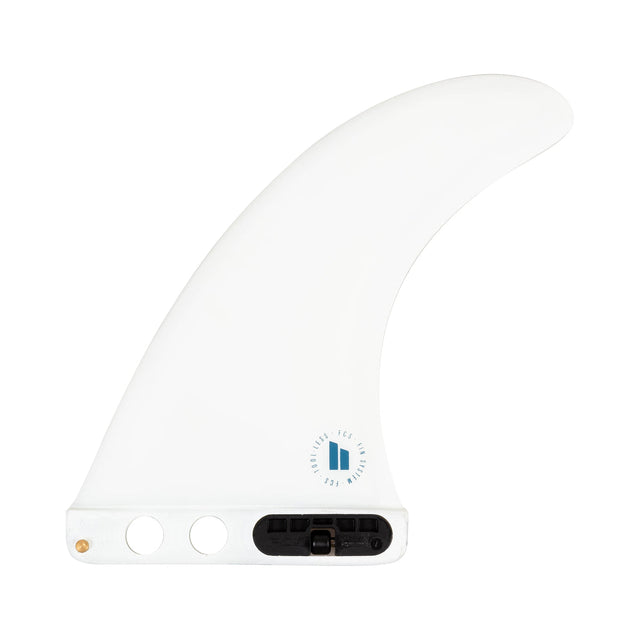
FCS Skindog PC Single Fin-White-7"
$126.00
Sale price  $126.00 Regular price  $126.00
Save 15% with board purchase
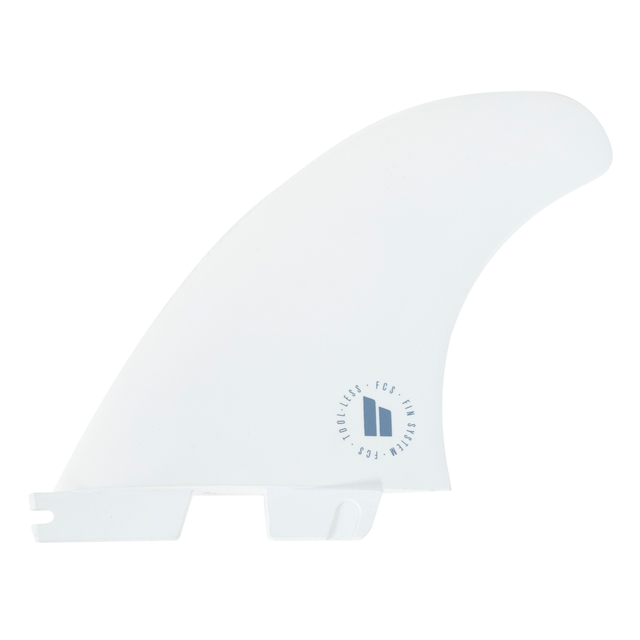
FCS II Skindog PC Aircore Side Byte Fin Set-Dawn Grey-Medium
$105.00
Sale price  $105.00 Regular price  $105.00
Save 15% with board purchase
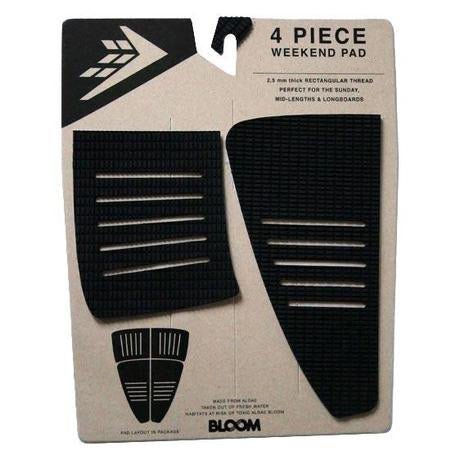
Firewire Weekend Thin Foot Traction Pad-Black
$42.00
Sale price  $42.00 Regular price  $42.00
Save 15% with board purchase
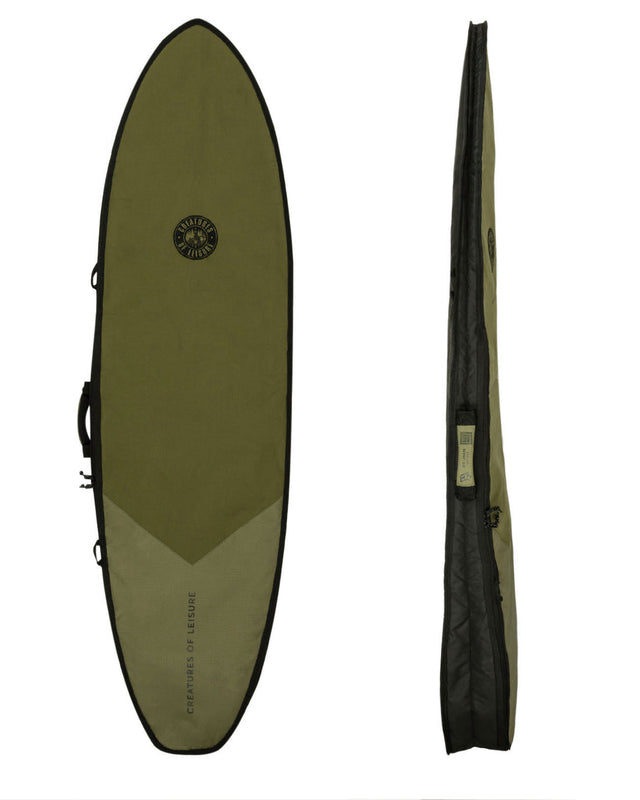
Creatures Hardwear Mid Length Day Use Boardbag-Military Black
$190.00
Sale price  $190.00 Regular price  $190.00
Save 15% with board purchase
Best For
Everyday Performance
High-performance surfing in average-to-good waves
Skill Level
Intermediate–Advanced
Forgiving enough to progress, responsive enough to push
Feel
Loose & Fast
Easy speed generation with skatey release through turns
Conditions
Waist–Overhead
Excels in punchy beachbreaks and everyday surf

This Board

SKU SUB262508286
Length 7'0"
Width 22"
Thickness 2.875"
Volume 47L
Construction Thunderbolt Black
Tail Round
Fin System FCS II
Fin Setup 4+1
Fins Not Included
Tail Patch No

Model Details

Shop all 9 boards

Skindog Ova REAL Review

9 boards IN STOCK  •  47L–60L
Skindog Ova Surfboard

Easy to paddle, fast and smooth whilst trimming with an amazing response when on your rail.


Dimensions

7’0” x 22.00” x 2.88” | 47.00
7’6” x 22.25” x 3.00” | 53.00
8’0” x 22.75” x 3.13” | 60.00

From the Shaper

“Flow, glide, down the line speed and maybe most importantly the ability to get it turning from the middle of the board.”

Ben Skinner

REAL Review

About this video

Trip Forman and Jake Sacks review the Skindog Ova after surfing the 7'6" in Puerto Rico, covering sizing, duck-diving, wave range, paddling position, and Thunderbolt Red construction. They compare quad and two-plus-one fin setups and explain how each changes the board's speed, grip, and turning.

Show video transcript
Transcript (edited for clarity)

Trip Forman: Welcome to the REAL Board Loft. I'm Trip Forman. Today we have Jake Sacks with us, the REAL marketing manager, and we also have the Skindog Surfboards Ova. We just got back from Puerto Rico surfing with this board. This is a 7'6". This board is also available in 7'0" and 8'0", so the size range goes 7'0", 7'6", 8'0". Man, we had a really good time surfing this board.

Trip Forman: First, we're going to jump into the dimensions. For those of you who don't know, Skindog is Ben Skinner's surfboard brand, made in Thunderbolt construction. The Ova is Thunderbolt Red construction, which doesn't mean the board is red. It just means that it's all fiberglass layup. There's no carbon in the layup. All fiberglass layup, Red Thunderbolt construction: 7'6", 22¼" by 3", 53 liters on the dot. Just to give you some stats on Jake and me, I'm 6'2", about 200 pounds, maybe a little over after this trip. A lot of empanadas. Jake, what are your dimensions and volume?

Jake Sacks: Dimensions: 5'10" by 160.

Trip Forman: Is that a dimension? Is 160 a dimension, or is 160—

Jake Sacks: Yes.

Trip Forman: You're fine, bro. That's your volume.

Jake Sacks: That's my volume.

Trip Forman: We chose the 7'6" because they're 7'0", 7'6", 8'0". We're going to Puerto Rico, there's waves on tap the whole trip, and we're like, “All right, we're going to review this board. Let's just take the middle one.” The first thing I want to talk about is the sizing of this board to the surfer and what's the right size. At 200 pounds, 53 liters, I had no problem duck-diving it. I had to put it down. [Unclear comparison to duck-diving 40 liters.] But I could get it under the water and, with more serious surf, make my way out through the waves.

Jake Sacks: I struggled to duck-dive it a little bit. Definitely had to get way up on the nose to punch it through. There's a lot of volume in the nose on this.

Trip Forman: Windy today. A lot of volume in the nose, right?

Jake Sacks: Trying to duck-dive it in anything like open-water waves with power, I struggled a little bit. Also, for open water, the 7'6" was a little slower compared to something like an 8'0" or a 9'0".

Trip Forman: Or a longboard.

Jake Sacks: Yeah. I would probably go with the 7'0" for the duck-dive ability, or the 8'0" if I really wanted to be able to book it in between sets and everything. But it was possible to duck-dive it if you really needed to.

Trip Forman: That's a good point. They make the different sizes, and you can tune in on those sizes for the surfing that you're going to do. My size, I would ride all three of them. But if you start getting lighter, then you want to be selective as far as which one you're getting and the conditions that you're putting it in. Let's talk about performance. We surfed this board in a ton of different conditions. What do you think the smallest was that we surfed this board?

Jake Sacks: We probably had some waist-to-chest waves, really lined up, real glassy, and it was a blast in those. You could surf it really small, and it would get up and go.

Trip Forman: On the bigger sets, what would you say the bigger sets were?

Jake Sacks: Head and a half, maybe. Maybe double overhead on some of your waves. There were some intense waves that we rode on this thing.

Trip Forman: Put it through its paces and tried to really figure out fins and how to ride it in the different situations. You were getting those sick cheater fives where you were way up on the nose, and it held for the whole length of the wave, even with the quad.

Jake Sacks: I was surprised by that, to be able to get so far up on the nose and have it not spin out.

Trip Forman: It was really impressive. It was cool. This thing had a lot of range wave-wise, as far as the type of wave and the height of the wave as well. At the beginning of the trip, we had some pretty slopey reef breaks. Then we had some more pitchy, pointy reef breaks. On some of those smaller days, we were sitting way inside, under priority, just racking up wave count. There were some tiny ones, I'd even say lower than waist-high on some of them, and it would still go.

Trip Forman: The thing that stood out to me right away is the range on the board. If you get it in the right size, you could take it on a trip and, with a couple sets of fins, ride it for the whole trip in a really wide range of conditions. The maneuverability of the board is really good. A really good turner, really good drawn-out turns. I think the fin setup really affected the type of turn that the board did, and also the overall performance and personality.

Jake Sacks: We really found that the fin setup changed the feel of the board a ton. A lot of boards, you switch the fins up and they're a little different. This one was almost like two separate boards. The quad really lined up, speedy down the line, really fast, perfect for barrels or steep sections. You could beat section after section. But when you went to throw a turn in it, or a cutback [unclear phrase], you wanted that two-plus-one. It was just magic on those cutbacks with the two-plus-one, whereas the quad felt a little sticky on the cutbacks. That was cool to see, that you could take this on a trip, have such a wide range of wave sizes, but then also switch up the fin setup and get different feels for different wave styles as well.

Trip Forman: I think a lot of people would get a board like this and probably just choose their preferred fin setup and never even switch it, ever. Maybe they would do the two-plus-one and rock the center fin forward and back to get loose—we did that a little bit—or tighten it up. Most people are going to get a quad and just go with it, or a two-plus-one and just go with it on a board like this. But I would definitely say, for this board, it is two completely different boards, and it really tunes it into the conditions.

Trip Forman: On those more intense days that were hammering, the quad was awesome. It was really confident on late drops. It was really confident high up on the wall of the wave.

Jake Sacks: Instant speed.

Trip Forman: Instant speed, making sections. I felt that same thing you were talking about, that wrapping it back into the pocket was a little bit stiff with the quad. But there was so much confidence and grip on the wall, and speed on the wall, that it was really good for that type of wave. You rode a two-plus-one earlier in the trip. I never rode it on that day. I was riding the longboard that we were testing. I went to the two-plus-one that evening, later on in the trip, and that was literally one of the biggest changes that I've experienced in a board, changing fins. It went from not really wrapping all that well back into the pocket to just owning that type of turn. It's magic. It's just absolutely magic.

Trip Forman: I would definitely recommend carrying and getting both sets of fins for it and using it with both sets of fins. It's got FCS boxes for the quads or for the side bites, and then it's got a standard longboard box in the center. We went with the FCS Firewire Dan Mann fins for the quads. For the two-plus-one, we did the Skindog FCS Side Bytes, which are bigger, and a 7-inch center fin. When you look at that setup, I remember you and I were looking at it, it looks like a lot of fins.

Jake Sacks: We were like, “Whoa, that's going to be too much.”

Trip Forman: Just the look of it, it looked over-finned, but it didn't feel it.

Jake Sacks: It felt great. If it does feel a little sticky, moving that center fin just a little bit farther forward helped loosen up the tail a little bit.

Trip Forman: I remember on that first session, we pulled it a little bit further forward. Then, when we were riding it in some bigger stuff, we slid it back just to get the board to track a little bit more confidently. That was cool. That was a really interesting setup and experience, feeling how different this board can feel with those fin setups. In surfing this board, what else did you feel helped performance?

Jake Sacks: Really interesting, I felt like when you paddled it, cheating forward a bit really helped. There's so much volume up here under your chest. If you're back on the board, it's easy to get the nose too far up, and it just wouldn't get down into the wave. You could cheat really far forward, and then it would drop in. Once it got into the wave, it would just glide right onto the rail. I would definitely say scoot forward a little bit, especially on the smaller, gutless waves. When it got bigger, if you wanted to stall it a little bit, you could get back on it a little bit. Then the drop wouldn't be quite as extreme. You could time the wave that way, from scooting up or back a little bit. Definitely a lot of range in how this board can feel. For travel, it's perfect. You really can ride it.

Trip Forman: You mentioned the cheater fives on it. This thing just wills you to the front of the board.

Jake Sacks: It's true.

Trip Forman: When we were waxing it, you were waxing this one, and you're like, “Where should I stop? Should I stop here and leave the logo out of the wax?” I'm like, “No, go in front of the logo.”

Jake Sacks: Then you went all the way on the wax. I was like, “What are you doing, all the wax up there?” But there ended up being so much good ride time up in this area of the board, I was stoked that it was waxed up there.

Trip Forman: For people who want to do a cheater five, that's cool. But I think an important thing to point out is how big the sweet spot is on this board. You could literally be from here to here, and the board works. It doesn't nosedive or pop a wheelie or anything that's going to mess up the overall wave.

Jake Sacks: You can pump it from up front, too.

Trip Forman: Correct. You can pump and then step back on it to throw your cutback. In a sense, it was forgiving that you could stand on it anywhere. But also, from a performance standpoint or from a style standpoint, you could be literally anywhere on the board, and it worked.

Trip Forman: Let's talk about the construction, because I think the Thunderbolt in this board is something worth mentioning. Thunderbolt, it's an epoxy resin construction, but a lot of people take epoxy as being stiff or chattery, which is a lot of times a mistake. They think anything epoxy—the epoxy is just a liquid, the resin. But the Thunderbolts, I feel, have really good flex, good bend and rebound out of the turns.

Jake Sacks: Weight to them, too.

Trip Forman: The Red, it's lighter than a heavy poly board, but it's not ultra-light. We had some decent windy days. We had some devil wind coming up into the face at you on those bigger days with juice, and this thing handled it.

Jake Sacks: The chop.

Trip Forman: It goes right through it. A lot of that's just the design of the board and the rails and the bottom, everything, but also the weight and the materials inside the board. I think the Thunderbolt's got really good flex and rebound in this board, but in all the Thunderbolts I've tried.

Trip Forman: The other thing that blew me away is one of the waves that we surfed was really shallow. It had these crazy coral features underneath you, and you would get sucked up onto the shallow part when you were waiting for the wave. All of a sudden, the water would drain out, and you were just dry-docked, tail-first, on a coral head. It's the worst sound and feeling ever. It's like, “Gong,” on the tail. A couple times I landed on this—this is obviously a brand-new board; we left the test board down where we were staying—I was expecting the whole tail to be completely split open. It was literally just paint nicks.

Jake Sacks: Chipped.

Trip Forman: It wasn't even chips. It was just nicks, and it didn't even need repair. I think I did that three separate times in one whole day, and I was expecting the tail to be completely butterflied open. It was fine. It was totally fine. I didn't even have to use sandpaper on it. It was good to go. That was pretty impressive. I thought that was really good, especially when you're talking about a sharp edge back here. That's going to be more susceptible when you have 200 pounds of weight sitting on it, just grinding on the razor-sharp reef, because you don't want to get off the board at that point. You don't want to sacrifice yourself. I thought that was really cool, too.

Trip Forman: Overall, performance-wise, really impressed. Range-wise, equally as impressed. The different amount of ways you can surf on it, and what you said about the personality and performance of the board switching the fins up, I thought was super cool. It gives you even more range, and the cool and different things you can do on the board. It's just really fun. I had a great time on it, and I'm stoked, when we go back down there, to surf it more. If it was a dog, I would have brought it home. But I was like, “No way, I'm going to surf this thing for sure more,” because in the right waves, on the right days, it's magic for sure. Any closing comments on your side?

Jake Sacks: It was really sick. I like that they have the 7'0", the 7'6", and the 8'0", too, so you can scale it to your weight and everything as well, and get those same feelings with a wide variety of boards and be able to travel with it. Super stoked on it.

Trip Forman: That wraps up everything on the Skindog Ova. If you have any questions about the Ova or would like to place an order for one, you can always give us a call at the shop, 252-987-6000, or look us up online, realwatersports.com/surfing. For those of you who can't get enough of these photos and video clips of us in Puerto Rico, us mere mortal, professional recreational surfers getting our shred on in Puerto Rico, and you want to go down there yourself, you can always book yourself a week at the REAL house, Villa Sessions, by calling that same number and using that same website. It's epic.

Jake Sacks: Yeah.

Trip Forman: Thanks, everyone, for tuning in. Jake, thanks for grinding it out and going on the trip.

Jake Sacks: Oh, yeah.

Trip Forman: Because it was tough.

Jake Sacks: It was tough work.

Trip Forman: Again, thanks, everyone.

Additional Details

Skindog Surfboards’ Description

An easy board to ride for all abilities in all conditions, perfect for anyone stepping up from a shortboard or stepping down from a longboard, this is your answer! Wide point forwards for your paddling needs, with flowing curves into a round tail. Relaxed rocker with a very unique foil, packing lots of volume with a low performance rail. Soft 50/50 rails flowing into a sharp tucked edge through the tail. All designed to make this board easy to paddle, fast and smooth whilst trimming with an amazing response when on your rail. The Hull entry and 50/50 rails give the board the ability to easily make turns you didn't think you could make! Flow, glide, down the line speed and maybe most importantly the ability to get it turning from the middle of the board.

 
Exclusive Offer

Save 15% on Accessories & Wetsuits

Add this surfboard to your cart and save 15% on qualifying surfboard accessories and wetsuits.

Shop Accessories
REAL Support

Shop with Confidence

We ship surfboards worldwide and our REAL Pros are here to help you choose the right board.

Talk to a REAL Pro

Recommended for you

Loading product recommendations